How to Navigate NDIS Complex Personal Care Funding and Providers
by Libby Bishop
Key Takeaways
- High-intensity care requires specialised skills: If you live with a spinal cord injury, standard care may not be enough. You may need high-intensity support, which requires a personal care team with extra, nurse-approved training for technical medical tasks.
- NDIS funding matches your needs: The NDIS splits personal care into two tiers based on your physical and medical risks.
- Tier 1 covers basic everyday tasks like grooming
- Tier 2 funds the specific, high-intensity care required for complex health needs (eg PEG Feeding)
- Alternative funding options are available: If you don't qualify for the NDIS, you can still access complex care. Specialist providers like Spinal Life Australia work with other funding streams, including workplace and motor vehicle accident insurance (like NIISQ), veterans' programs, or private funding.
Who Requires Complex Care?
When living with a spinal cord injury (SCI), a neurological condition, or a severe physical disability, everyday support becomes much more intense. Under the NDIS, this is known as High Intensity Daily Personal Activities.
It means standard care isn't enough anymore—you need support workers with extra training to help with complex tasks like bowel care, ventilators, or specialised transfers. Figuring out how the NDIS funds this care is the key to getting safe, skilled, and reliable help right in your own home.
How NDIS Personal Care Funding Works
Under the NDIS, personal care sits within your Core Supports budget under the category Assistance with Daily Life.
The NDIS divides personal care into two distinct tiers based on clinical risk and the level of skill required:
Tier 1: Standard Support
Covers standard hands-on assistance or supervision with everyday tasks like showering, dressing, and standard transfers. Workers may hold a Certificate III or IV in Individual Support alongside an NDIS Worker Screening Check.
Tier 2: High Intensity Support (Complex Support)
For individuals living with spinal cord injuries, advanced neurological conditions, or complex physical disabilities.
What to Look for in a Personal Care Provider
Choosing a provider is a personal decision. Your personal support worker will be in your home, assisting with intimate tasks, so trust and compatibility matter as much as qualifications. Look for providers whose workers have specific training in physical disability. Generic training or screening doesn't always prepare staff for the realities of spinal cord injury or complex mobility needs.
To make sure your new support team is set up safely and smoothly, it helps to know exactly what standards to look for based on your funding tier:
Requirements for Tier 1: Standard Support
- Provider Accreditations: Must be an NDIS Registered Provider operating in compliance with the NDIS Practice Standards Core Module.
- Worker Qualifications: Team members must hold a valid NDIS Worker Screening Check and may hold a Certificate III or IV in Individual Support (Disability), and potentially First Aid and CPR certifications.
- Core Capabilities: Workers are trained to deliver basic personal care such as showering, dressing, grooming, standard transfers, nutritional assistance, and light domestic duties.
Requirements for Tier 2: High Intensity Support (Complex Support)
- Provider Accreditations: Must hold a High Intensity NDIS Registration (Registration Group 0104) and be fully audited against the NDIS Module 1 (High Intensity Daily Personal Activities) Practice Standards.
- Worker Qualifications: Along with current experience and qualifications and NDIS screening checks, team members must complete specialised High Intensity Support Skills Training (HISST). Each support worker must have their competency in your specific medical tasks formally reviewed, signed off, and delegated by a Registered Nurse.
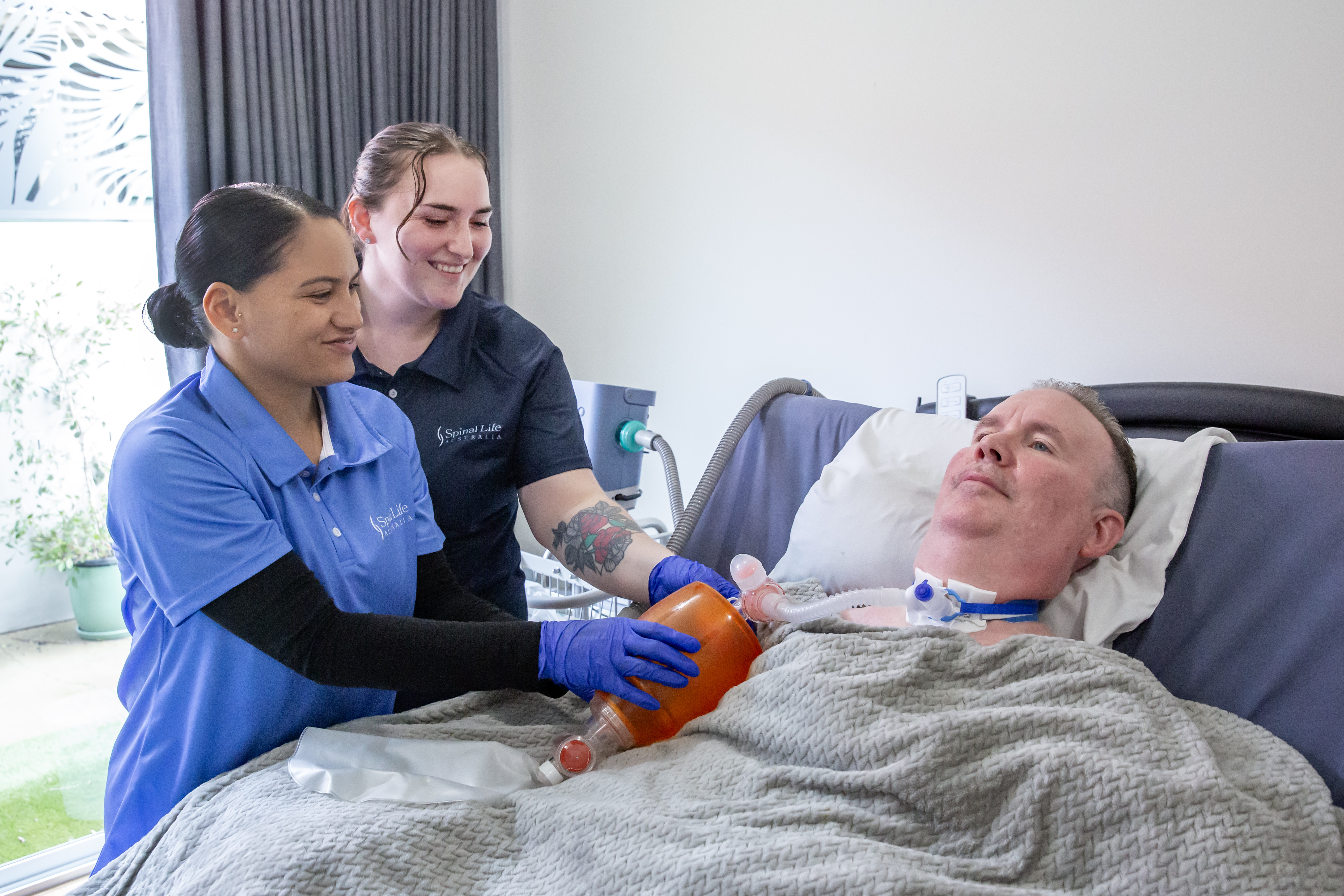
- Core Capabilities: Support teams are equipped to safely manage the exact number of complex health tasks required for your sub-level (Low, Intermediate, or High). This includes technical protocols like Complex Bowel Care, Autonomic Dysreflexia monitoring, PEG feeding management, Tracheostomy & Ventilation Airway support, and Catheter Management and Dysphagia Management.
The Spinal Life Difference: Lived Experience Meets Clinical Expertise
Spinal Life Australia was founded by people with disability, for people with disability. This unique perspective shapes everything we do. Our Personal Support Workers are highly trained specialists who receive extended competency assessments directly from our nursing team, tailored specifically to your individual needs. This means they truly understand how to handle complex care routines while maintaining absolute dignity and respect.
At Spinal Life Australia, we don't just rely on standard checks. Our specialised Nursing Team delivers personalised training directly to your support team, focused entirely on you. To make sure everything runs smoothly right from the start, your team also receives hands-on guidance and on-site support from an experienced Key Worker while setting up your new care team. This senior support worker ensures your routine is followed exactly the way you like it. Your comfort, care, and peace of mind come first.
Funding Options Beyond the NDIS
The NDIS is the primary pathway for many, but we proudly work with a wide range of Australian funding bodies to make sure you get the care you need:
- Accident Insurance Schemes: If your physical disability resulted from a workplace or motor vehicle accident, we work directly with major schemes like NIISQ (National Injury Insurance Scheme Queensland), WorkCover, and the TIO to deliver your care package seamlessly.
- Veterans’ Support: We support veterans, war widows, and widowers through the Veterans’ Home Care program.
- Private Funding & Insurance: If you do not have a government plan or choose to self-fund your care, our team can easily structure a private arrangement tailored to your needs.
In Summary: Specialised Support Providers Matter
Inviting support into your home is all about ensuring you stay in the driver's seat of your own daily routine. When managing complex physical needs, having true specialists by your side is what makes all the difference.
By taking care of the demanding physical tasks, a specialised team brings deep disability expertise, clinical peace of mind, and highly trained support workers right to your door. We focus on handling the technical care safely and smoothly, so you can focus entirely on doing what matters to you.
Get in Touch
If you have any questions about your complex care call our friendly Customer Care team for a no-obligation chat today on 1300 774 625, or email us at enquiries@spinal.com.au
FAQs About Complex Personal Care Support
What training do personal care workers receive for complex environments?
Training varies by provider. At Spinal Life Australia, Personal Support Workers complete core modules plus advanced, client-specific clinical competencies overseen by our nursing team. This covers technical procedures like catheter maintenance, bowel regimens, PEG feeding, and non-invasive ventilation oversight.
How many hours of personal care does the NDIS fund per day?
The NDIS builds funding models around essential daily routines. However, high-intensity plans involving complex clinical risks (such as daily respiratory therapy, mechanical hoisting, or intensive pressure area turns) are systematically assessed for extra hours or two-worker allocations based on clinical evidence.
What options exist if I am not eligible for the NDIS?
If you fall outside NDIS pathways (e.g., age requirements or accident conditions), you can easily access complex personal care through alternative streams like state-based accident insurance (NIISQ, WorkCover), the Department of Veterans' Affairs (DVA), or customised private self-funded frameworks.
Any Questions or Comments? Let us know below.
Filed Under: disability support, Personal Care